


 Beyond Brewing: An Introduction to Distilling
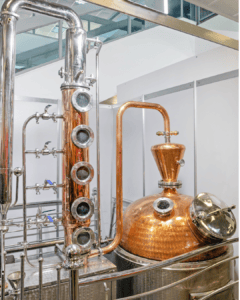 Beyond Brewing: An Introduction to Distilling
Homebrewers are naturally curious people. We enjoy understanding ingredients, experimenting with recipes, and learning the science behind fermentation. Many of us eventually become interested in another branch of the fermentation family: distilling.
Recently, the corporate brand manager of a leading tequila company was at NTHBS getting CO2 for an event. We started chatting about his role, the market, and the equipment and process improvements. I was very much in the mode of “tell me more”, as we all probably did the first time we started getting interested in making beer or wine or mead or other creations at home. So fascinating that, even after all these years of homebrewing, there’s still more to learn!
Although distilling beverage alcohol at home remains illegal under current U.S. federal law, there is growing interest in the hobby. Organizations such as the Hobby Distillers Association continue working with lobbyists and legislators to bring home distilling under regulations similar to those that legalized homebrewing in 1978. At the same time, Texas and the rest of the country have seen tremendous growth in craft distilleries. As more people become interested in whiskey, rum, gin, vodka, and brandy, I thought it would be a great opportunity to learn how these spirits are made and how the science relates to skills many homebrewers already understand.
This article isn’t about teaching someone to distill alcohol at home. Instead, it’s about understanding the ingredients, equipment, and science behind one of fermentation’s oldest crafts.
Fermentation Comes First
One of the biggest misconceptions about distilling is that a still somehow “creates” alcohol. It doesn’t. The alcohol is created by yeast, just as it is in brewing, winemaking, meadmaking, and cider making. A distiller’s first step is making a fermented liquid containing alcohol. Brewers call this wort before fermentation and beer afterward. Winemakers ferment must into wine. Cider makers ferment juice into cider. Distillers generally refer to their fermented liquid as a wash. Grain-based distillers may also use the term beer, while fruit distillers often use terms like wine or fruit wine before distillation.
Regardless of the name, the process begins the same way: starches or sugars are extracted from the fruit or grain; yeast is pitched into the fermentor with the wort/must/juice/wash; the yeast complete their aerobic and anaerobic processes of consuming and breaking down the sugars, and alcohol and CO2 are generated.
Only after fermentation is complete does distillation begin.
What Does Distillation Do?
Distillation does not make alcohol. Rather, it concentrates alcohol and other volatile compounds by taking advantage of differences in their boiling points.
When a fermented wash is heated, various compounds begin evaporating into vapor. That vapor travels into a condenser, where it cools back into liquid. The result is a spirit with a much higher alcohol concentration than the original fermented wash. This simple concept has been refined over centuries into an art that combines chemistry, engineering, and sensory evaluation.
Where Does the Sugar Come From?
Like brewing, distilling begins with fermentable sugars. Some ingredients, like fruits, already contain fermentable sugar. Others contain starch that must first be converted into sugar. Common distilling ingredients include: barley, corn, rye, wheat, oats, rice, potatoes, sweet potatoes, molasses, sugar cane juice, grapes, apples, pears, and many other fruits.
Each ingredient contributes different flavors to the finished spirit.
The Role of Enzymes
Many grains and potatoes store energy as starch, which yeast cannot ferment directly. Just as in brewing, enzymes are needed to break starch into simpler sugars that the yeast can consume. During mashing, enzymes such as alpha-amylase and beta-amylase convert starch into fermentable sugars. Some distillers also use commercial enzyme preparations to improve conversion efficiency, particularly when working with grains that contain little natural enzyme activity.
If you’ve brewed all-grain beer, you’ve already used this chemistry.
Pot Stills and Reflux Stills
From homebrewing, you probably already recognize many of the pieces of equipment involved in distilling, eg hot and cold liquor tank, mash tun, kettle, fermenter, siphons, pumps, hoses, thermometers, hydrometers, and cleaners and sanitizers.
Stills are the pieces of equipment that evaporate the alcohol vapor from the beer or wash then condense it back into more concentrated alcohol. Not all stills work the same way. The two most common designs are pot stills and reflux stills.
Pot Still
Pot stills are the traditional design used for many flavorful spirits such as Scotch whisky, Irish whiskey, cognac, and many rums. Because they allow more flavorful compounds to remain in the finished spirit, they produce beverages with greater character.
Reflux Still
Reflux stills repeatedly condense and re-evaporate vapor inside a column. This repeated separation produces a much purer, higher-proof spirit. Reflux stills are commonly associated with vodka and neutral spirits. They emphasize purity rather than retaining grain or fruit character.
Other Pieces of Equipment
Depending on the style of spirit being produced, commercial distilleries may also use equipment such as:
| Equipment | Purpose |
|---|---|
| Condenser | Cools alcohol vapor back into liquid so it can be collected. |
| Reflux Column | Repeatedly condenses and re-evaporates vapor to produce a higher-purity, higher-proof spirit. |
| Thumper (Thump Keg) | A secondary vessel that partially re-distills the vapor, increasing proof and sometimes adding flavor. |
| Dephlegmator | A controllable condenser at the top of a reflux column that regulates how much vapor is returned to the column for additional purification. |
| Sight Glass | A transparent section that allows the distiller to observe liquid flow, vapor behavior, or packing inside the still. |
| Collection Vessel | A container used to collect the distilled spirit, often changed throughout the run to separate heads, hearts, and tails. |
| Parrot Hydrometer | A device that allows a hydrometer to continuously measure the alcohol content of the spirit as it leaves the still. |
| Spirit Safe | A locked glass enclosure used in commercial distilleries to allow observation and sampling while preventing unauthorized access to untaxed spirits. |
| Pump | Transfers mash, wash, cooling water, or finished spirits safely and efficiently between vessels. |
| Filter | Removes particulates or, in some applications, unwanted compounds to improve clarity or produce a cleaner-tasting spirit. |
| Boiler (Still Pot) | The vessel in which the fermented wash is heated to produce alcohol vapor. |
| Column Packing | Copper mesh or stainless packing that increases vapor-liquid contact for more efficient separation in a reflux still. |
| Copper Mesh | Helps remove sulfur compounds from the vapor, improving spirit aroma and flavor. |
| Gin Basket | Holds botanicals so alcohol vapor extracts their aromas and flavors during distillation. |
| Mash Tun | Used to convert grain starches into fermentable sugars before fermentation, much like in brewing. |
| Fermenter | Where the mash or wash is fermented into an alcoholic liquid before distillation. |
| Heat Source | Gas, electric, or steam heat used to bring the wash to distillation temperature. |
| Temperature Probe | Monitors temperatures at key points in the still to help the distiller understand and control the run. |
Each piece of equipment performs a specific role in controlling or measuring the distillation process.
Why Distillers Make “Cuts”
Not every compound evaporates at exactly the same temperature. As the still runs, the composition of the vapor changes continuously. Distillers divide the run into several portions commonly called heads, hearts, and tails.
The heads contain a higher proportion of lighter, more volatile compounds and are generally not retained for beverage production.
The hearts contain the cleanest and most desirable spirit.
The tails contain heavier compounds that may contribute harsh or earthy flavors.
Exactly where one cut ends and the next begins depends on the equipment, recipe, and the distiller’s experience. Professional distillers rely heavily on smell, taste, temperature, proof, and years of experience when making these decisions.
Alcohol Is More Than Ethanol
Although ethanol is the primary alcohol people associate with distilled spirits, fermentation produces many different compounds.
These include ethanol, methanol, higher alcohols (often called fusel alcohols), aldehydes, esters, and organic acids.
Each contributes differently to aroma, flavor, and spirit quality. Managing these compounds is one of the defining skills of an experienced distiller.
What Makes Different Spirits Different?
Many distilled spirits begin with remarkably similar processes. The differences come from starting ingredients, fermentation, distillation method, aging, blending, and local regulations. For example:
- Whiskey is distilled from fermented grain (like beer).
- Bourbon is a type of whiskey made from a mash bill containing at least 51% corn and aged in new charred oak containers under U.S. regulations.
- Brandy is distilled from fermented fruit, most commonly grapes.
- Vodka is distilled to produce a very clean, neutral spirit. (Contrary to popular belief, vodka can be made from any fermentable, not just potatoes)
- Gin begins as a neutral spirit that is flavored primarily with juniper and other botanicals.
- Rum is distilled from sugar cane products such as molasses or cane juice.
- Tequila is distilled from fermented blue agave and is protected by geographic and production regulations in Mexico.
Each of these products reflects centuries of regional tradition as well as chemistry.
Next time you’re at a commercial distillery, be sure to ask the production team about their products and setup .. I bet they’d be happy to share the details!
Distilling Is Another Branch of the Fermentation Family
One of the themes of the Homebrew Skills Tree is that the science behind fermentation connects many different beverages. Whether you’re brewing beer, making mead, fermenting cider, or learning about distilling, the same principles appear again and again:
- healthy yeast
- sugar conversion
- temperature control
- ingredient selection
- careful measurement
- patience
Understanding these principles makes us better fermentation scientists, regardless of what we’re making. As interest in craft distilling continues to grow, learning the language and science of distillation helps us appreciate another fascinating branch of the fermentation world, even while we wait to see how future legislation shapes the hobby.
North Texas Homebrew Supply is a proud member of the Hobby Distillers Association. There is some great research and legislation updates at their site. Reach out to Rick and his team to help support adding home distilling to the US homebrew law.
Cheers!
-eric-