Introduction: A New Season of Fermentation
Welcome back, Homebrew Fans!
Spring always feels like a reset. Warmer weather, longer days, and a little more energy to try something new.
At the shop, we’re seeing something interesting happen. The community of people making their own fermented beverages is growing – but it’s changing too. Many of our longtime beer brewers are still crafting incredible batches and competing and winning in Bluebonnet and other regional events. But, we’re also meeting more people making mead, cider, kombucha, sake, and hard seltzer. Some are brewing in apartments or small kitchens. Many are making smaller batches and expecting faster results.
What all of these fermenters have in common is curiosity. Whether you’re making five gallons of IPA or one gallon of cider, the process is still the same beautiful transformation: yeast, time, and a little bit of science turning simple ingredients into something remarkable.
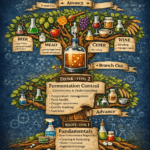
Over most of a year, our team mate Jimmy interviewed folks, put notes on the whiteboard, and came up with The Homebrew Skills Tree.
The Idea Behind the Skills Tree
Recipes are fun, but skills are what actually make fermentation successful.
If you’ve ever wondered why one batch turns out great and another doesn’t, the answer usually isn’t the recipe – it’s the process. Small skills compound over time: how you clean your equipment, how you measure fermentation, how you manage yeast health, temperature, oxygen, and ingredients.
The Skills Tree is our way of organizing those abilities into a clear path anyone can follow.
Think of it like, well, a tree!
The roots are the fundamentals that every fermenter needs – cleaning, sanitation, and understanding your ingredients.
The trunk is where consistency starts to appear – measuring gravity, managing temperature, understanding yeast and fermentation.
The branches are where your personal interests grow. Some brewers dive deep into hops and water chemistry. Others explore honey varieties for mead, fruit additions for cider, or tea blends for kombucha.
Every fermenter climbs the tree in their own way.
Fermentation Is Bigger Than Beer
For many years, homebrewing was mostly associated with beer. Today the world of fermentation is much broader and creative. I just read a story this evening about how a whiskey company is aging their product in BEER barrels, instead of the other way around!
In the store, we regularly meet people who are:
-
Making traditional meads from local honey
-
Turning fresh apple juice into ciders
-
Brewing tart kombucha with creative fruit flavors
-
Experimenting with rice and koji to produce sake
-
Producing small-batch hard seltzers at home
These fermentations may use different ingredients, but the underlying skills are surprisingly similar. Yeast health matters. Sanitation matters. Measuring fermentation progress matters. Temperature control matters.
That means the same skills that help you brew better beer can also help you make better wine, cider, mead, kombucha, or sake.
Smaller Spaces, Faster Results
Another change we’re seeing is how people brew.
Many new fermenters live in apartments or smaller homes. They’re often working with one- or two-gallon batches instead of traditional five-gallon setups. They’re looking for efficient equipment, simple processes, and beverages that ferment and mature more quickly.
That’s great news for the fermentation community.
Smaller batches make experimentation easier. You can try new ingredients, test new techniques, and learn quickly. A cider or kombucha can be ready in weeks instead of months. Even experienced brewers often rediscover the joy of fermentation when they start exploring these smaller formats. MANY of our winning homebrew beers came from small batches and even extract kits.
The Skills Tree is designed to support both approaches: traditional brewing and small-batch experimentation.
What to Expect This Year
Over the next year, we’ll be sharing a weekly series of posts that explore different fermentation skills – from beginner fundamentals to advanced techniques.
Some topics will apply to everyone, such as:
-
Cleaning and sanitation
-
Removing chlorine from brewing water
-
Measuring fermentation progress
-
Understanding oxygen and yeast health
Others will focus on specific beverages, such as:
-
Dry hopping and mash techniques for beer
-
Nutrient management for mead
-
Acid balance and titration for wine
-
Juice and tannin structure for cider
-
SCOBY health and pH for kombucha
-
Koji and rice fermentation for sake
Each post will connect the science of fermentation with practical tools and ingredients that help you succeed.
The Goal: Confidence
The real goal of the Skills Tree isn’t perfection. It’s confidence.
The confidence to try a new beverage style.
The confidence to understand what’s happening in your fermenter.
The confidence to troubleshoot when something doesn’t go exactly as planned.
And the confidence to add that one more thing at just the right time, because you know exactly how it’s going to turn out.
Fermentation has always been part science, part art, and part adventure. The more skills you develop, the more enjoyable that adventure becomes.
Where Are You on the Tree?
As we start this series, take a moment to think about your own fermentation journey.
Maybe you’re just learning the basics of sanitation and fermentation. Maybe you’ve been brewing beer for years and want to explore mead or cider. Or maybe you’re already deep into water chemistry, yeast propagation, and advanced process control.
Wherever you are, there’s always another branch of the tree to explore.
And we’re excited to explore it with you.
Let’s Go!
Over the next few weeks, we’ll begin at the roots of the Skills Tree with the most important skill in fermentation: cleaning and sanitation.
It may not be the most glamorous topic – but it’s the one that makes everything else possible.
Until then, if you stop by the shop, let us know what you’re fermenting these days. Beer, mead, cider, kombucha, sake, tella, siwa, or something else entirely – truly, we love hearing what everyone is working on.
Spring is here, and it’s a great time to start something new.
-eric-